
Initial Costs Versus Life-Cycle Costs

Maryam Mirhadi, Ph.D., VMA

Amin Terouhid, Ph.D., CVS


Executive takeaway. The alternative with the lowest initial costs does not necessarily provide the lowest total cost or the best value. A sound value engineering (VE) comparison first confirms that each alternative performs the required functions at an acceptable level. It then evaluates the resources each alternative will consume over an appropriate period. Life-cycle cost analysis places costs occurring at different times on a common economic basis so owners can reasonably compare alternatives.

Begin with function and performance

VE is a structured process for improving value by analyzing required functions and developing alternatives. SAVE International’s Value Methodology places function, or the main purposes that a system aims to serve, at the center of the analysis. [1]

Initial costs are the cost required to design, purchase, install, test, or place an alternative into service, whereas life-cycle cost (LCC) is the total cost of acquiring, operating, maintaining, replacing, and disposing of an asset over a defined period. A future dollar is not economically equivalent to a dollar spent today. Therefore, life-cycle cost analysis (LCCA) can be used as an economic method to calculate and compare those costs. Before performing LCCA, the team should confirm functional equivalence, that the alternatives provide the same required functions or at an enhanced level, and satisfy the owner’s minimum performance criteria.

Test the assumptions, not only the arithmetic

An LCC result is only as reliable as its inputs. Owners should document the source, timing, and uncertainty of each cost. Energy prices, operating hours, maintenance labor, component life, replacement scope, loss of service, and price escalation may change the ranking. As such, sensitivity analysis can be used to perform the systematic testing of how results change when uncertain inputs vary. By varying service life, energy cost, or the discount rate, the team can identify the conditions under which the preferred alternative changes.

It is important to note, however, that not every important factor can be priced reliably. Nonmonetized effects can still be evaluated without assigning a dollar value. Examples may include factors such as reliability, occupant comfort, operational continuity, safety, adaptability, environmental performance, and stakeholder impacts. These effects should be documented and evaluated alongside LCC. A lower LCC is not a sound recommendation if the alternative impairs a required function or creates unacceptable performance risk.

Recommendations for owners

As a professional recommendation, owners should confirm functional equivalence and minimum performance; define a common analysis period, base date, and cost basis; and include all relevant costs including acquisition, operation, maintenance, replacement, loss-of-service, and disposal costs. They also need to use current owner-approved economic assumptions; document data sources and uncertainty; test influential variables; and report initial costs, LCC, and nonmonetized effects separately to ensure a reasonable LCCA can be performed for reasonably assessing and comparing alternatives. This approach makes the reasoning transparent and keeps VE focused on the life cycle costs, not initial costs of alternatives.

References

[1] SAVE International. About the Value Methodology.

[2] Federal Highway Administration. Life-Cycle Cost Analysis.
Developing a Value Engineering Change Proposal

Amin Terouhid, Ph.D., CVS

Maryam Mirhadi, Ph.D., MVA


Executive takeaway. A Value Engineering Change Proposal (VECP) should allow an owner to confirm that the alternative preserves functions and performance, produces supportable savings, and can be implemented. The proposal should combine technical evidence, contract revisions, cost and schedule analysis, risks, and life-cycle effects.

Understand what qualifies as a VECP

A Value Engineering Change Proposal, or VECP, is a contractor-initiated proposal submitted after contract award under a value engineering provision. It requires a change to the contract and seeks better value without impairing essential functions or characteristics. The Federal Highway Administration explains that a VECP may improve performance, value, or quality; reduce construction cost; or shorten delivery time while considering life-cycle cost and other applicable factors. [1]

A function characterizes what the project must accomplish. Performance defines how well that function must be delivered through measurable requirements. Resources include cost, time, labor, equipment, materials, and energy. Life-cycle value considers performance and resource use during construction, operation, maintenance, and replacement. These characteristics distinguish a VECP from a routine product substitution, correction of a contractor error, change in quantity alone, construction claim, or request for payment for work already required by the contract. The contract governs whether a proposal qualifies, what the contractor must submit, how long the owner has to review it, how proposal data may be used, how savings are shared, and how payment is made. For example, Federal Acquisition Regulation clause 52.248-3 establishes minimum content and a savings-sharing method for federal construction contracts that contain the clause. State, local, and private contracts may differ. Both parties should therefore review the applicable provision before developing the VECP. [2]

Build a decision-ready proposal

The proposal should begin with a concise comparison of the existing requirement and proposed change. It should identify the drawings, specifications, contract sections, permits, and approvals requiring revision, then explain the reasons, advantages, and disadvantages. The owner should be able to see what would change and what would remain unchanged.

The contractor should then demonstrate functional equivalence, meaning that the alternative provides the same required functions or some level of enhancement to the functions at the required level of performance. A function matrix is a compact table that compares those functions and performance criteria for the existing and proposed solutions. Appropriate support may include design calculations, product data, test results, code analysis, prior-use information, quality-control requirements, and required professional approvals. SAVE International’s Value Methodology supports evaluating required functions rather than favoring a particular solution. [4]

The proposal should next explain how the change will be implemented. It should address design responsibility, submittals, permits, procurement, temporary work, installation, inspection, testing, warranties, operations, maintenance, and training. If commissioning is required, the documented testing and verification that systems are ready for service, it should also be included. The contractor should state when written authorization is needed and show the effect on the current project schedule. Until authorization is issued, the existing contract requirements remain in effect. [2]

Present cost and schedule effects transparently

The cost analysis should present separate estimates for the affected existing work and the proposed work using consistent quantities, pricing dates, labor and equipment rates, markups, and assumptions. It should identify contractor development and implementation costs, subcontractor effects, owner review or testing costs, and changes to operating and maintenance costs. The difference between two supplier quotations is not the total saving when the change transfers or adds other costs. The schedule analysis should identify the activities and logic relationships added, removed, or revised by the proposal to determine if any adjustments need to be made to the schedule, and if it is justified.

Use a disciplined owner review

The owner should first screen the proposal for compliance with the contract and for completeness. Technical reviewers should then verify function, performance, code compliance, constructability, the practical ability to build the alternative—safety, quality, schedule, and operational effects. Estimators should reconcile quantities, rates, exclusions, development costs, owner costs, and life-cycle consequences. Questions, assumptions, revisions, and the final decision should be recorded in a controlled decision log.

Owners typically appoint one review lead and establish a response schedule; involve design, construction, estimating, scheduling, operations, maintenance, procurement, legal, and funding representatives as needed; separate documented savings from uncertain benefits; and identify or assess risks. An accepted VECP should be implemented only through the written contract modification required by the contract. A complete proposal makes value visible, testable, and auditable for both parties.

References

[1] Federal Highway Administration. Value Engineering Change Proposals.

[2] Federal Acquisition Regulation 52.248-3. Value Engineering-Construction, October 2025.

[3] Electronic Code of Federal Regulations. 23 CFR Part 627, Value Engineering.

[4] SAVE International. About the Value Methodology.

Preparing for a Value Engineering Workshop

Amin Terouhid, Ph.D., CVS

Maryam Mirhadi, Ph.D., VMA


Executive takeaway. A productive value engineering (VE) workshop begins well before the team meets. The owner should define the decisions to be addressed, assemble reliable project information, involve team members or specialists who understand the project’s functions and constraints, and establish how recommendations will be reviewed. Effective preparation provides enough information for analysis while preserving enough flexibility to act on the results.

Define the assignment before assembling the team

Value engineering is a structured, multidisciplinary process for improving value by analyzing required functions and developing alternatives. SAVE International describes the Value Methodology as a systematic process that combines function analysis with creative problem-solving to improve value. [1]

A VE study is the complete analysis and reporting effort; the workshop is the facilitated working session in which the team applies the VE Job Plan. Before that session, the owner and facilitator, who serves as the neutral process leader, should prepare a study brief. This short document defines the project need, study objectives, boundaries, known constraints, required performance, and decisions open to change. It should also identify fixed commitments, including permits, funding conditions, stakeholder agreements, and procurement actions. Clear boundaries keep the team focused on feasible opportunities.

Build one reliable information package

The information package should give every participant the same current basis for analysis. At minimum, it should include the owner’s project requirements; design basis, meaning the criteria and assumptions that guide the design; current narratives, drawings, and calculations; applicable codes and approvals; cost estimate and assumptions; milestone schedule; procurement status; major risks; sustainability and resilience objectives; and available operating and maintenance data. Each document should show its date and status so the team can distinguish approved requirements from working assumptions.

Cost information should be organized by major project elements, not supplied only as a total. A cost model, a structured breakdown showing where resources are concentrated, helps identify functions with the greatest potential for improvement. The milestone schedule should show key design, approval, permitting, procurement, and construction dates that may limit implementation. A risk register, which records identified uncertainties and planned responses, helps the team test whether an alternative creates or reduces exposure. Consistent with this approach, FHWA’s VE Job Plan places information gathering before function analysis. [2]

Select participants for knowledge and decisions

The VE team combines the technical and operational knowledge needed to examine a project from several viewpoints. Depending on the scope, participants may include the owner, designer, estimator, scheduler, construction specialist, operator, maintainer, user representative, permitting specialist, and subject-matter experts, people with specialized knowledge relevant to the study. Select participants for their knowledge, not title alone. It sis generally recommended that five to eight participants with backgrounds suited to the project’s scope and complexity work well. [3]

The designer should explain the design basis and constraints, while independent participants test assumptions without treating the workshop as a critique of the design team. The owner should also name an executive sponsor, meaning the senior representative who supports the study and resolves policy issues, and a decision maker authorized to receive and act on the recommendations.

Prepare participants to work, not merely attend

Several days before the workshop, distribute the study brief, information package, agenda, participant roles, and questions requiring attention. Ask participants to review the material and identify missing information or conflicts before the first session. At the kickoff, confirm terminology, assumptions, constraints, and evaluation criteria. Evaluation criteria are the agreed measures used to compare alternatives, such as function, safety, reliability, cost, schedule, maintainability, environmental impact, and stakeholder acceptance.

The owner should also establish who will validate calculations, price alternatives, review code or permit effects, decide on recommendations, and track implementation. A technically sound proposal creates no value until decision makers act on it. The readiness plan should therefore include review dates, accountable parties, and the evidence required for approval.

Before authorizing the workshop, the owners are recommended to ask:

(1) Are the objectives and boundaries clear?

(2) Is the information current and detailed enough for function, cost, schedule, and life-cycle analysis?

(3) Are technical knowledge, operational experience, stakeholder awareness, and decision authority represented?

(4) Are commitments distinguished from open decisions?

(5) Is there a defined process for validating, deciding, and implementing recommendations?

References

[1] SAVE International. About the Value Methodology.

[2] Federal Highway Administration. The Value Engineering Process and Job Plan.

[3] Federal Highway Administration. Value Engineering Frequently Asked Questions.

FAST Diagrams for Enhancing Value

Amin Terouhid, Ph.D., CVS

Maryam Mirhadi, Ph.D., VMA


Executive takeaway. A Function Analysis System Technique (FAST) diagram is a function-logic model used in value engineering (VE). It shows why project functions are needed and how they are achieved. By testing those relationships within a defined study scope, FAST separates needs from proposed solutions and opens the discussion to alternatives.

Start with functions, not components

SAVE International’s Function Analysis Guide presents FAST diagramming technique and relationship validation as tools for organizing functions, while Value Analysis Canada describes FAST as a way to identify missing, duplicated, or unnecessary functions. [1] [2] A function states what a project or system must do. In standard VE practice, the team describes it with an active verb and a measurable noun. The verb states the required action; the noun identifies what receives the action and what the team can evaluate.

This language keeps the analysis focused on need. For example, “install roof drain” is an activity and “roof drain” is a component; both point toward a particular solution. By contrast, “collect water” states the required result without prescribing equipment. Examples of properly worded functions include “control runoff,” “transfer loads,” and “convey passengers.” Measurable means the team can establish performance criteria—requirements used to judge how well the function is performed. [3]

Test the How/Why logic

FAST arranges functions according to function logic: the reasoned relationship between required actions, not the sequence of construction. Moving left to right, the team asks, “How is this function achieved?” The answer is a lower-order function, a more specific action. Moving right to left, it asks, “Why is this function needed?” The answer is a higher-order function, a broader purpose. Reading both ways helps expose unsupported assumptions and missing functions. [2]

The main horizontal chain is commonly called the FAST critical path. Here, the term means the principal How/Why path through the function model. It is not the critical path in a Critical Path Method (CPM) schedule, which identifies the sequence of activities controlling project duration. FAST contains no activity durations, dates, or schedule float. The team identifies the functions by asking, “When this function occurs, what else must occur?” In FAST, When expresses a supporting relationship, not clock time.

Use scope lines to focus the study

Scope lines are vertical boundaries defining the part of the function model the VE team will examine. A higher-order function may remain outside the left boundary because it explains the project purpose but is not open to change. A lower-order function may remain outside the right boundary because the logic continues beyond the selected subject. Within the scope, the basic function is the studied system’s principal purpose. Classification depends on scope; a function may be basic in one study and secondary in another.

Hypothetical example: a building roof-drainage system

Assumptions: The study concerns a conventional building roof within a defined property boundary. The illustration is a simplified function model, not a final design.

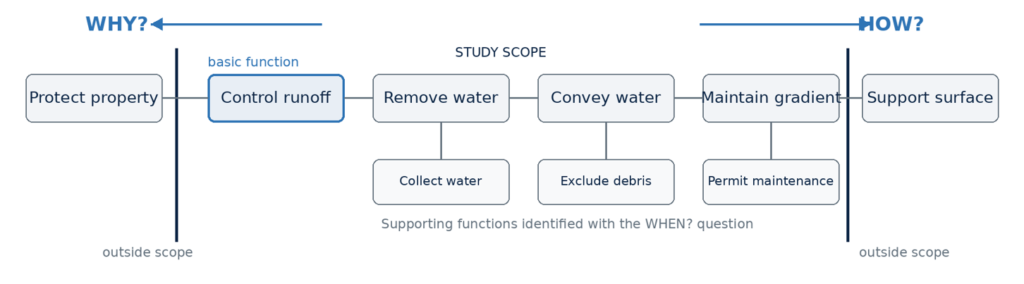
Figure 1. Simplified FAST model for roof drainage

Arrows label the questions; the connecting lines represent logical relationships, not workflow or elapsed time


Reading left to right, the owner protects property by controlling runoff; runoff is controlled by removing water, conveying it, and maintaining the gradient that enables movement. Reading right to left tests why each function exists. The supporting functions, collect water, exclude debris, and permit maintenance, may be essential even though they are not on the main path.

Because the model avoids naming roof drains, downspouts, pipes, scuppers, or detention tanks, the team can compare different ways to perform the functions. Performance criteria may include flow capacity, reliability, maintainability, code compliance, site constraints, and water-quality objectives. Resources include money, materials, labor, energy, and time. Comparing performance with the resources required over design, construction, operation, maintenance, renewal, and disposal connects the discussion to life-cycle value—the value delivered over the system’s useful life—rather than initial cost alone.

Common mistakes that reduce the diagram’s value

Teams sometimes replace functions with components (“roof drain”), specifications (“six-inch pipe”), or activities (“install piping”). Others arrange the boxes in installation order, turning FAST into a process flowchart or CPM schedule. Additional mistakes include leaving scope lines undefined, treating When as elapsed time, accepting logic that works in only one direction, combining competing solutions in one function model, and adding so much detail that the central relationships disappear. A useful FAST model remains implementation-free: it defines required actions without committing the team to a particular component or design solution. [4]

The facilitator’s role and the owner’s next steps

A FAST facilitator is the neutral process leader who guides the analysis without selecting the design. The facilitator draws out functions from knowledgeable participants, challenges solution-oriented wording, tests How/Why logic in both directions, and records disagreements and assumptions. The diagram is a shared model that the technical team validates against project requirements and available evidence, not an answer imposed by the facilitator.

As a professional recommendation, owners should define the study scope and performance criteria before diagramming; involve people who understand design, construction, operations, and maintenance; test every principal-path relationship in both directions; record unresolved assumptions; and use the agreed functions to organize the creative, evaluation, development, and recommendation phases of the VE study. FHWA’s VE Job Plan likewise places function analysis before creative and evaluation work. That sequence reinforces the central point: FAST is successful when it improves the alternatives and decisions that follow. [3]

References

[1] SAVE International. Function Analysis Guide.

[2] Value Analysis Canada. Function Analysis System Technique (FAST).

[3] Federal Highway Administration. The Value Engineering Process and Job Plan.

[4] Borza, J. S. FAST Diagrams: The Foundation for Creating Effective Function Models (2011).

Function Analysis: Finding Better, Alternative Solutions

Amin Terouhid, Ph.D., CVS

Maryam Mirhadi, Ph.D., VMA


Executive takeaway. Function analysis identifies what a project, process, organization, or system must accomplish before the value engineering (VE) team decides how to deliver it. By separating the required purpose from the proposed solution, owners can explore more alternatives while protecting the functions. The resulting discussion supports better decisions about both initial expenditure and long-term ownership of the subject project, process, organization, or system.

Begin with the purpose behind the proposed solution

Value Engineering (VE) is a structured, systematic methodology designed to optimize project outcomes relative to consumed resources. According to SAVE International [1], the process relies on a multidisciplinary team—guided by a certified facilitator—that rigorously analyzes required system functions before generating and evaluating potential alternatives. Function analysis provides the foundational framework and common language that makes this process effective. To apply this methodology effectively, key terminology must be clearly delineated:

  • Component: The physical entity or mechanism that performs a function (e.g., a steel beam).
  • Function: The essential action or purpose a system or component performs (e.g., transfer loads).
  • Specification: The prescriptive parameters governing materials, construction, or performance (e.g., load capacity).

Defining a requirement purely by its function—such as “transfer loads”—allows project teams to evaluate alternative materials and configurations without prematurely committing to a single design path.

Use two words to make the need clear

Function analysis commonly pairs an active verb, which expresses an action, with a measurable noun, which identifies what the action affects. This concise format focuses discussion on one function at a time and helps move attention away from a predetermined solution. [2] Examples of these pairs include:

  • Transfer loads
  • Control temperature
  • Convey passengers

These two-word expressions define what the system must do. However, they do not replace detailed engineering performance criteria. Instead, they serve as a neutral baseline. For instance, while “convey passengers” establishes the core functional need, the project team must still define specific performance parameters—such as peak demand, vertical rise, maximum wait time, accessibility standards, and system reliability.

Classify functions within a defined study scope

Determining functions requires establishing a clear study boundary (scope). Within this boundary, functions are categorized into two primary types, although other types of functions also exist:

  • Basic Functions: The fundamental, primary reasons for the system’s existence.
  • Secondary Functions: Auxiliary tasks that support the basic function or satisfy secondary requirements

SAVE International emphasizes that while basic functions must be preserved, secondary functions often represent significant cost-reduction or optimization opportunities. Importantly, functional classification depends on the defined analytical boundary. For example, “control temperature” represents a basic function when evaluating an HVAC system, but a secondary function when evaluating a complete airport terminal facility. Categorizing a function as secondary does not imply it is optional; many secondary functions remain mandatory for reasons such as operational integrity.

Open alternatives, then test them against the requirements

Reframing the right questions to ask expands the solution space. For example, asking “Which elevator model minimizes equipment cost?” focuses narrowly on procurement, finishes, and vendor pricing. In contrast, asking “How else can we convey passengers between these levels?” encourages the team to evaluate spatial layouts, service relocations, operational adjustments, or existing equipment upgrades alongside new equipment installations.

Proposed alternatives must undergo rigorous technical validation against baseline design criteria. For instance, substituting stairs for an elevator is invalid if regulatory accessibility standards require vertical motorized transit. Similarly, relocating services to reduce foot traffic may create unforeseen operational bottlenecks. As outlined by the Federal Highway Administration (FHWA), the VE process sequentially transitions from function analysis to creative alternative generation, followed by rigorous technical and financial evaluation [3].

This evaluation phase must account for life-cycle performance, balancing initial capital costs against long-term operational expenditures (energy consumption, routine maintenance, and replacement schedules). A low-cost capital option that incurs high maintenance or energy costs over time rarely delivers optimal long-term value.

Practical exercise: rewrite the question

To apply function analysis, consider the baseline proposals in the table below. Identifying the underlying function and establishing clear evaluation criteria allows teams to objectively assess alternative options.

Starting statement

Suggested function

Example evaluation requirement

Use a steel beam

Transfer loads

Required load capacity, span, and allowable deflection limits

Purchase a larger air conditioner

Control temperature

Targeted indoor temperature range under peak environmental loads

Install an additional elevator

Convey passengers

Peak passenger demand, acceptable wait times, accessibility compliance

(Note: The examples provided above are illustrative; exact functions and performance parameters must be calibrated to the specific project scope.)

Implementation Recommendations for Project Teams

To successfully integrate function analysis into upcoming project planning, the following course of actions is recommended:

  • Select a Critical System or component: Document its core functions, quantitative performance criteria, baseline design solution, and projected life-cycle costs.
  • Align Stakeholders: Engage owners, designers, contractors, and facility operators to confirm non-negotiable performance baselines prior to generating solutions.
  • Facilitate Consensus: Conduct structured workshops to resolve scope ambiguities and standardize functional definitions.
  • Document Decisions: Formally log the technical and financial rationale for accepting or rejecting each alternative.

Adopting this structured methodology transforms function analysis from a theoretical exercise into a repeatable, value-adding decision process.

References

[1] SAVE International. About Value Engineering.

[2] Value Analysis Canada. Function Analysis Phase.

[3] FHWA. The Value Engineering Process and Job Plan.

When Should Owners Conduct Value Engineering?

Amin Terouhid, Ph.D., CVS

Maryam Mirhadi, Ph.D.


Executive takeaway. Value engineering (VE) is a structured team process for finding better ways to meet a project’s needs. VE studies need to be conducted when the VE team has enough information to compare meaningful alternatives and enough time to implement the findings before major commitments. A design-completion percentage alone cannot establish that balance.

Match the study to the decision

SAVE International characterizes the VE process as a systematic process involving several disciplines and a qualified facilitator. Its emphasis on identifying required functions gives owners a useful starting point: define what the project must accomplish before choosing how to accomplish it. [1]

To determine when owners should conduct VE studies, it is helpful to review the typical phases through which projects are progressed. Concept development establishes needs and broad approaches. Schematic design turns the selected approach into preliminary layouts. Design development refines dimensions, materials, and coordinated building systems.

The Federal Highway Administration (FHWA) advises conducting VE once sufficient information is available and explains that no single best time applies to every project. Earlier studies retain broader choices but depend on less-developed information; later studies permit more detailed comparisons while facing more commitments. The useful study window depends on the decisions being evaluated. [2]

The table below identifies the main development stages in projects and describes which VE decisions are typically suitable for each stage.


Milestone

Available information

Suitable VE decisions

Concept development

Needs, site constraints, broad cost ranges

Site strategy, facility size, major alternatives

Schematic design

Layouts, preliminary systems, initial estimates

Space efficiency, system types, access

Design development

System sizes, materials, coordinated drawings

System configuration, materials, maintenance access

Preconstruction

Detailed drawings, bids, supplier terms

Targeted alternatives, installation methods, sequencing

The VE decisions are typical recommendations, not mandatory phase requirements.


This table illustrates how the scope of a VE study may change as the design progresses. During concept development and schematic design, the team can examine broad alternatives, such as changing the facility layout or selecting a different building system. During design development and preconstruction, the study generally becomes more focused on improving particular systems, materials, or construction methods. The owner should therefore begin by identifying the decisions the study is intended to influence and determining when those decisions will become difficult or costly to change.


The information needed should correspond to those decisions. Comparing alternative layouts requires an understanding of space needs, access, and operating requirements, but may not require detailed equipment selections. Comparing heating and cooling systems requires more specific information about building demands, operating hours, energy use, and maintenance needs.

Waiting for every design detail to be resolved can unnecessarily delay a study; proceeding without information essential to the decision can produce recommendations that cannot be supported. Where uncertainty remains, the team should identify its assumptions and explain whether additional information could change the preferred alternative.

Leave time to turn recommendations into changes

Having enough information is only one part of choosing the right milestone. The study must also finish early enough for its recommendations to be evaluated, approved, and incorporated into the project.

For example, changing the location of major equipment may require revisions to structural supports, electrical connections, and maintenance access. Those revisions involve additional design work and coordination. If equipment has already been ordered, the change may also involve cancellation charges or a different delivery date. Likewise, changes to a design submitted for a permit may require further review by the approving authority.

A practical approach is to work backward from the earliest commitment affected by the proposed study. Allow time for the workshop, technical evaluation, owner approval, design revisions, and any necessary purchasing or permitting changes. This helps establish when the study must begin and whether its anticipated benefits justify the effort required to implement its findings.

Apply the approach to an actual decision

Consider a hypothetical public building project in which heating and cooling equipment must be ordered before the remaining design is finished. If the owner waits for a later overall design milestone, the opportunity to select a different system may already have narrowed.

A better approach is to evaluate the system once the building’s heating and cooling demands, operating requirements, and feasible equipment options are sufficiently understood, while leaving time for approval before the order is placed. The comparison should address both required performance and life-cycle cost—the combined costs of purchasing, operating, maintaining, and replacing the system over the period being evaluated. This approach allows the owner to assess whether an alternative offers lasting value rather than merely a lower purchase price.

If essential information is still missing, the team can first identify promising alternatives and the information needed to evaluate them, then complete the comparison before purchasing. The study’s timing follows the decision and its information needs, rather than an arbitrary percentage of overall design completion.

Revisit the timing when circumstances change

Owners should also reconsider the need for a study when circumstances change. Examples include when a revised estimate exceeds the budget, operating needs change, site investigations reveal new constraints, or equipment delivery times threaten completion. These developments can justify a focused review even if an earlier VE study has been completed.

As a management recommendation, each proposed study should identify the decision to be influenced, the information needed, the people authorized to approve changes, and the last practical date for implementation. Any applicable agency, funding, or contractual requirements should be evaluated separately. Together, these steps help owners commission VE when its findings can still improve project outcomes.

References

[1] SAVE International. About Value Engineering.

[2] FHWA. Frequently Asked Questions: Value Engineering (study timing).

[3] AIA. Defining the Architect’s Basic Services (2023).

[4] AIA. Managing Quality in the Design Development Phase (2023).

Value Engineering Beyond Cost Reduction

Amin Terouhid, Ph.D., CVS

Executive takeaway. A proposed saving creates value only when its effects on required functions, performance, and long-term resources are understood. Owners should require evidence that an alternative delivers the needed outcome, including its operating and implementation consequences, before accepting the lower price.

Start with the required function

SAVE International describes value methodology as a systematic process conducted by a multidisciplinary team and led by a qualified facilitator. Its focus on understanding required functions helps value engineering (VE) teams reconsider how a project meets its purpose. [1] Similarly, FHWA describes VE objectives in terms of reliable, efficient function, overall cost, quality, and completion time. [2] As such, in projects, processes, or organizations, value can improve when performance requires fewer resources, or when a justified increase in resources delivers benefits the owner needs. Safety and mandatory requirements should also remain satisfied.

A structured study provides the evidence

SAVE’s job plan moves through information gathering, function analysis, creativity, evaluation, development, and presentation. A disciplined team clarifies needs before generating alternatives, screens those alternatives, and develops the strongest concepts into supported recommendations. Preparation and implementation follow-through make the study useful beyond the workshop. [1]

The focus of value engineering is not on cost reduction, but instead on enhancing value. As such, actions such as scope deletion are not necessarily the right solution. Scope deletion removes something from the project, but it is not necessarily beneficial. It does not necessarily enhance value either. Scope deletion may be appropriate when a need has changed, or an element is unnecessary, but losing a required function is a scope tradeoff. Product substitution changes the selected item; it may emerge from VE, but a lower quotation alone does not establish equivalent performance. Similarly, budget reduction sets a spending target without identifying how to meet it.

For owners, the practical distinction is the decision record: what function remains, what changes, what evidence supports performance, and what costs or risks move elsewhere. A proposal that cannot answer these questions needs further development before its savings are credited.

Make acceptance criteria explicit

As a practical recommendation, agree on acceptance criteria before comparing prices. The owner identifies service needs; designers establish technical limits; operators explain maintenance constraints; and cost and scheduling specialists assess implementation consequences. For example, two systems with the same nominal capacity may differ in part-load control, noise, maintenance access, or available replacement parts. Record those differences rather than assuming equivalence from a product description. Where a preference can be relaxed, obtain an explicit owner decision and show the resulting tradeoff. Where evidence is incomplete, identify the required investigation and its cost before presenting the alternative as ready for approval.

Based on what we discussed, it is recommended that the following five questions be asked before accepting a saving or VE alternative:

  1. Which required functions and measurable performance criteria remain satisfied?
  2. What calculations, tests, or operating evidence support the alternative?
  3. What is the net life-cycle effect, including redesign, operation, and replacement?
  4. What happens to schedule, reliability, maintainability, and risk?
  5. Who will approve, implement, and verify the promised outcome?

As a practical management recommendation, record the baseline, assumptions, responsible reviewer, and acceptance tests for each proposal. Track proposed savings separately from implemented and verified benefits.

References

[1] SAVE International, “About Value Engineering.”

[2] Federal Highway Administration, “Value Engineering,” About VE.

[3] NIST, Building Life Cycle Cost Programs. To discuss how a function-based value engineering study could support your project, contact us https://www.adroitprojectconsultants.com/contact-us/